Woodwork
What is Woodwork?
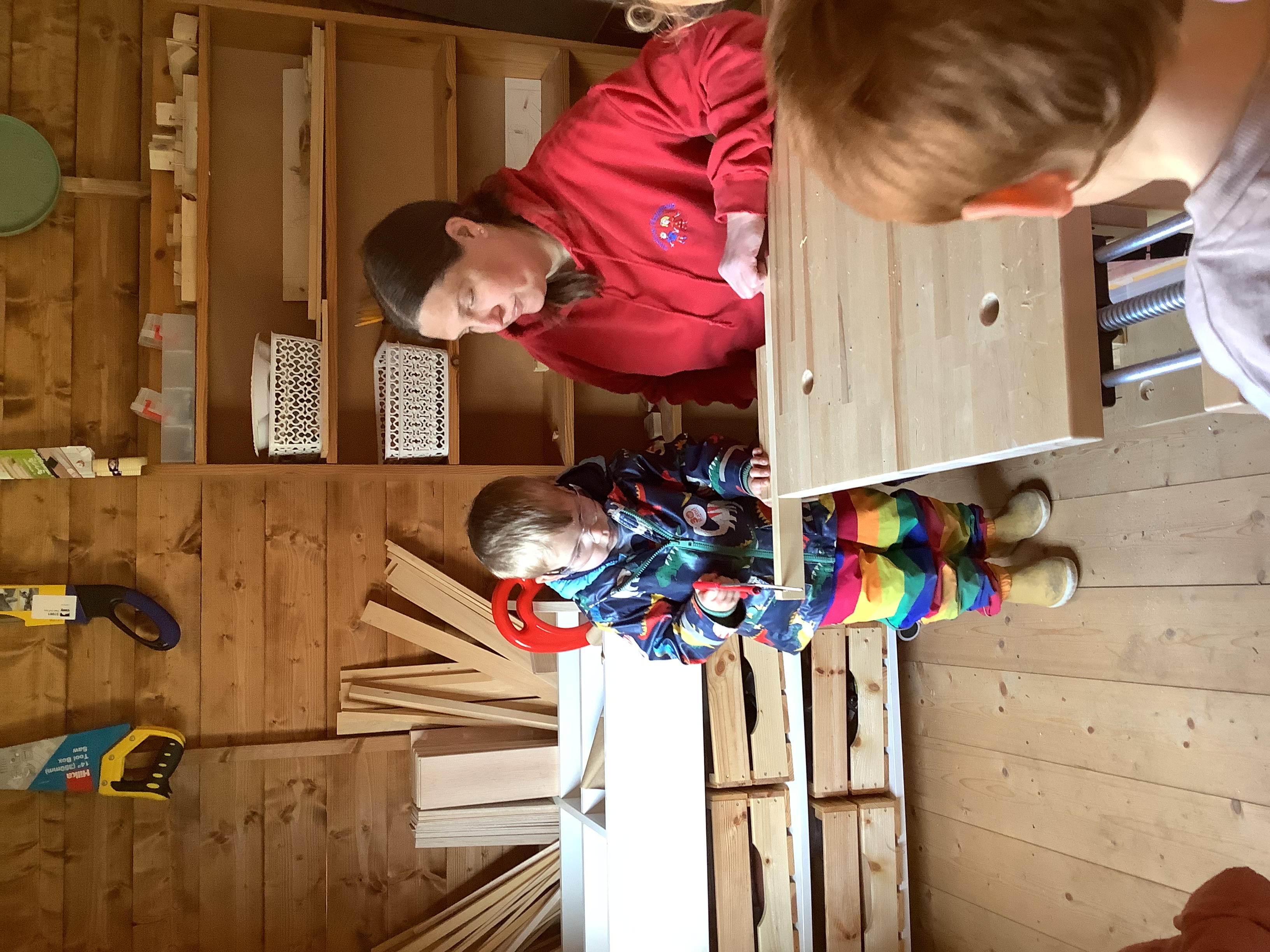
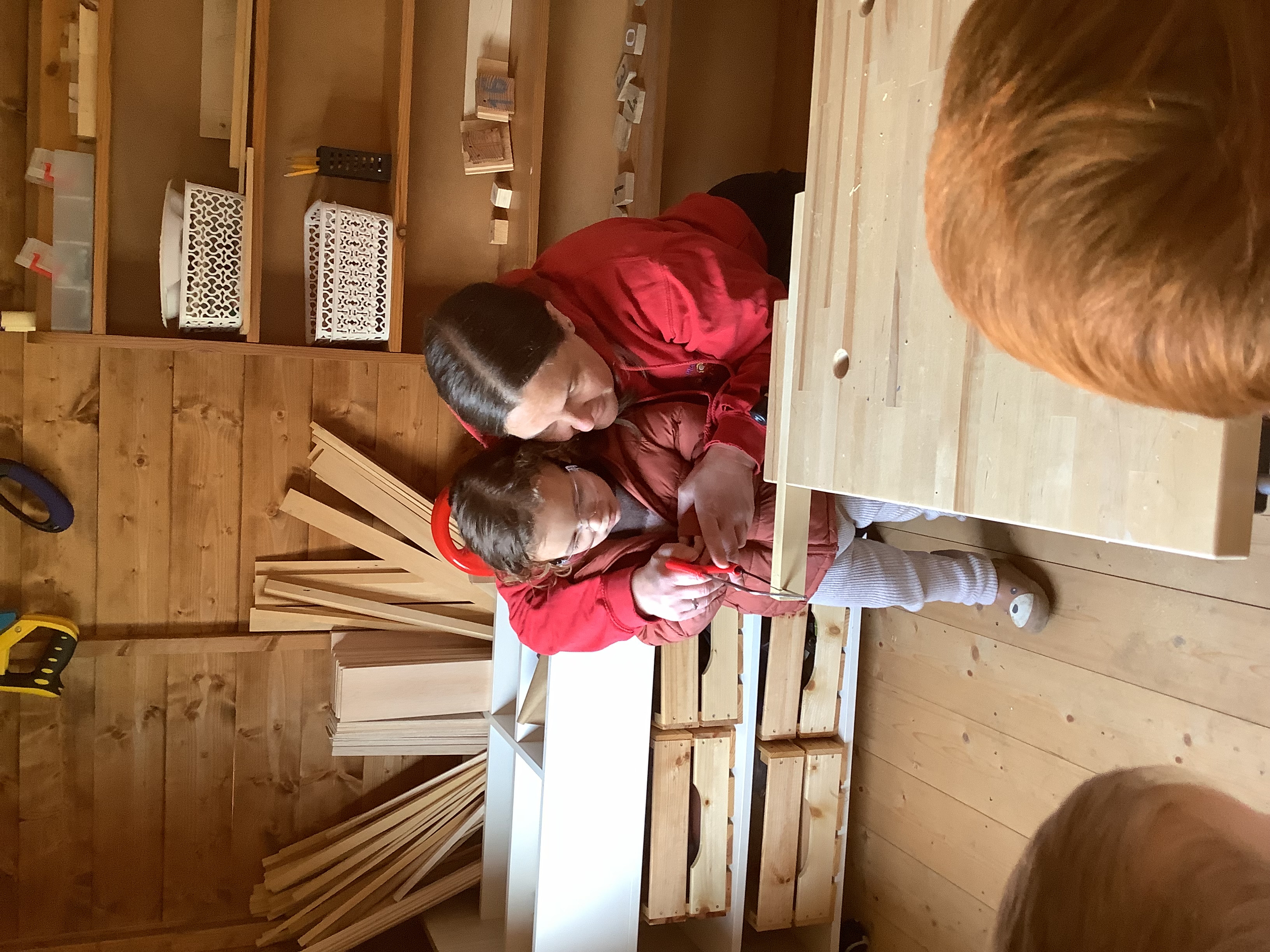
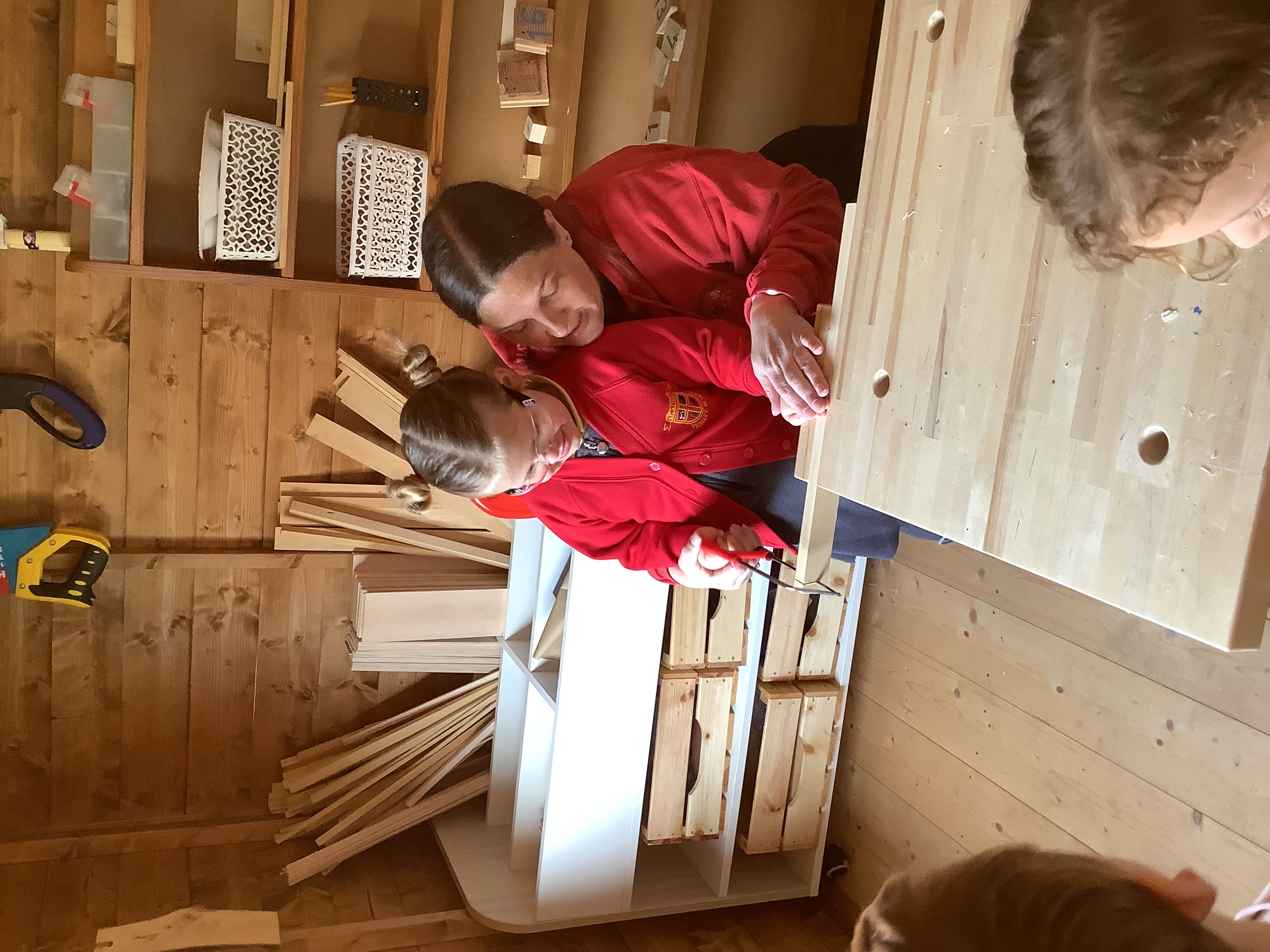
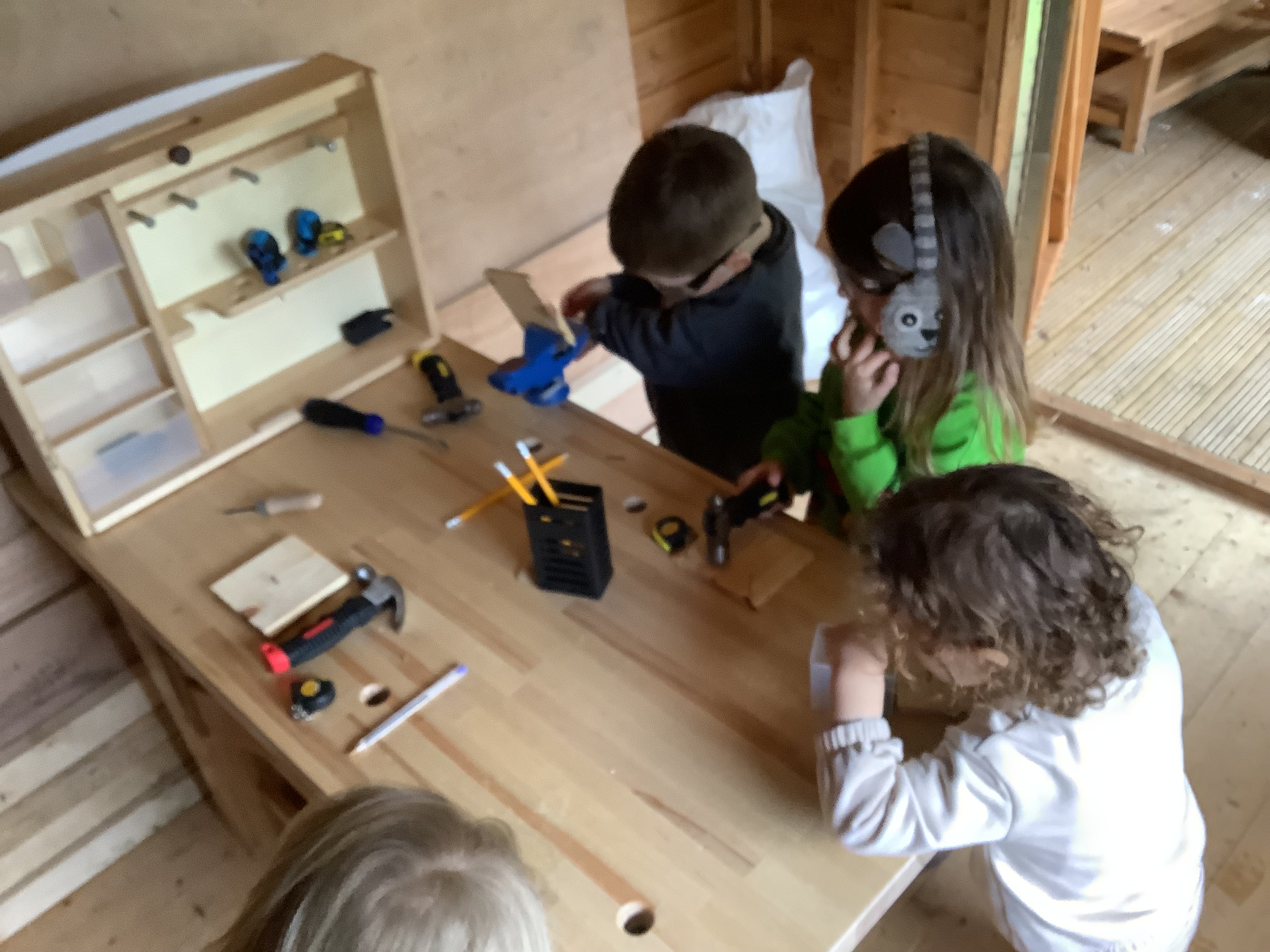
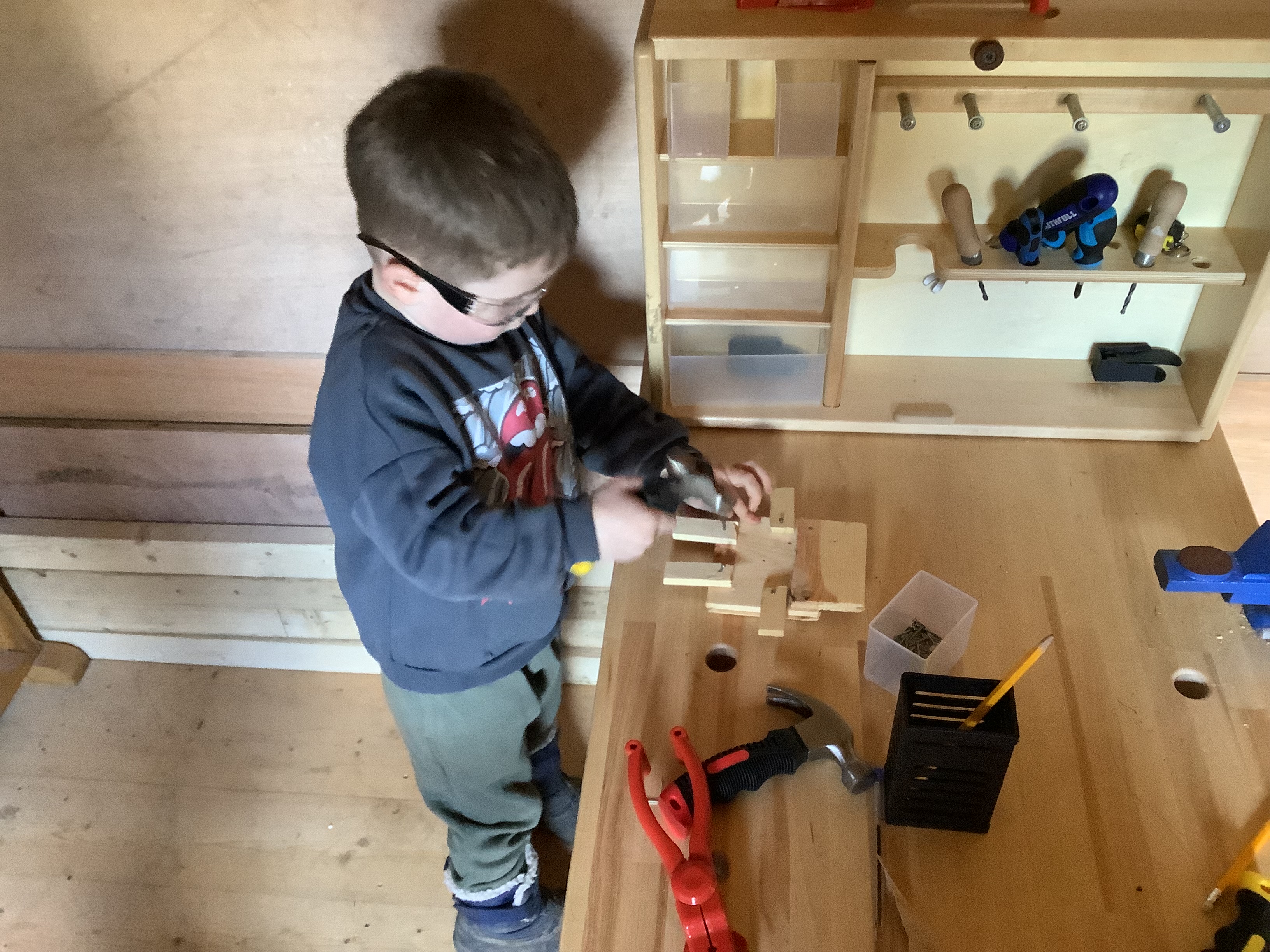
Woodworking in a nursery setting means children use simple, age‑appropriate tools and real pieces of wood to tap, join and build. Trained staff are always right beside them, showing how to hold and use each tool safely. Adults carefully choose the tools and materials and set clear rules so safety always comes first. Every child is closely supported so no harm happens and the experience stays calm and controlled.
Through this kind of play, children build fine motor skills, hand‑eye coordination and physical strength. They also develop problem‑solving skills as they plan, test and change their ideas. Woodworking encourages creativity and perseverance when things don’t work the first time. Children gain confidence and real pride when they finish something they have made with their own hands.
What We Offer?
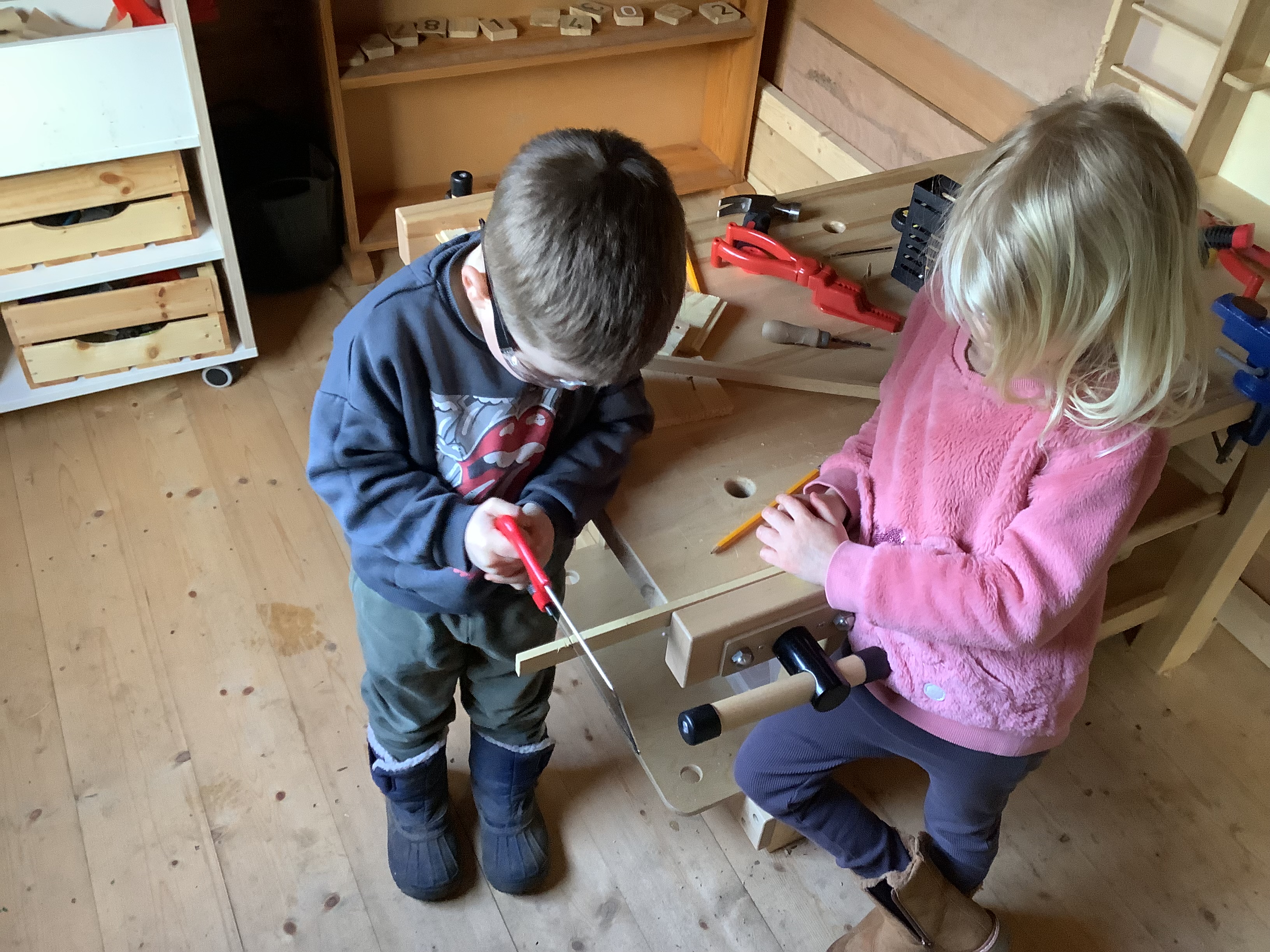
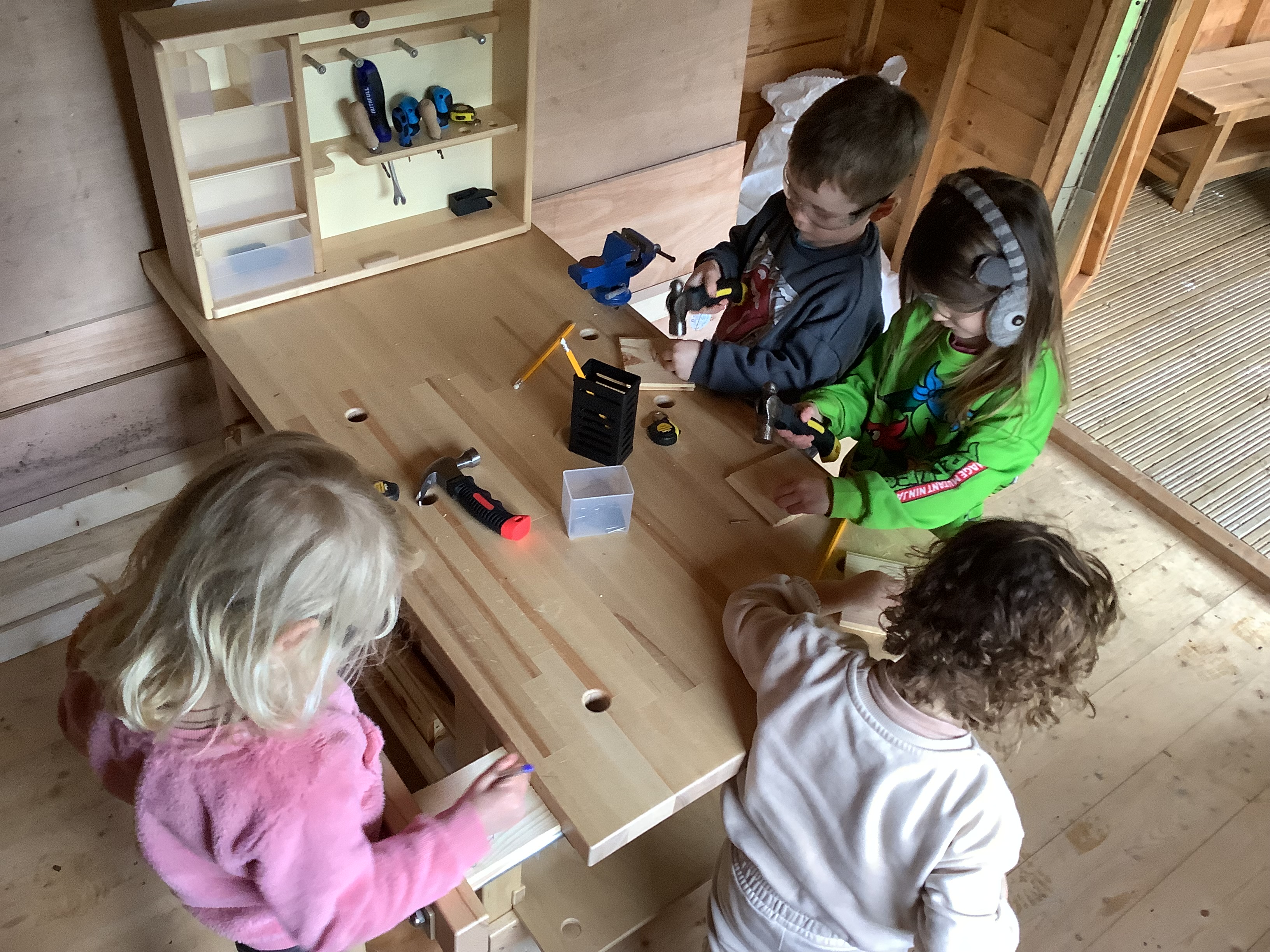
Our nursery offers a special woodworking shed that we open for the children a couple times each week. This dedicated space is set up just for safe, hands‑on making. We use real tools such as clamps, screwdrivers and hammers that are specially adapted for young children.
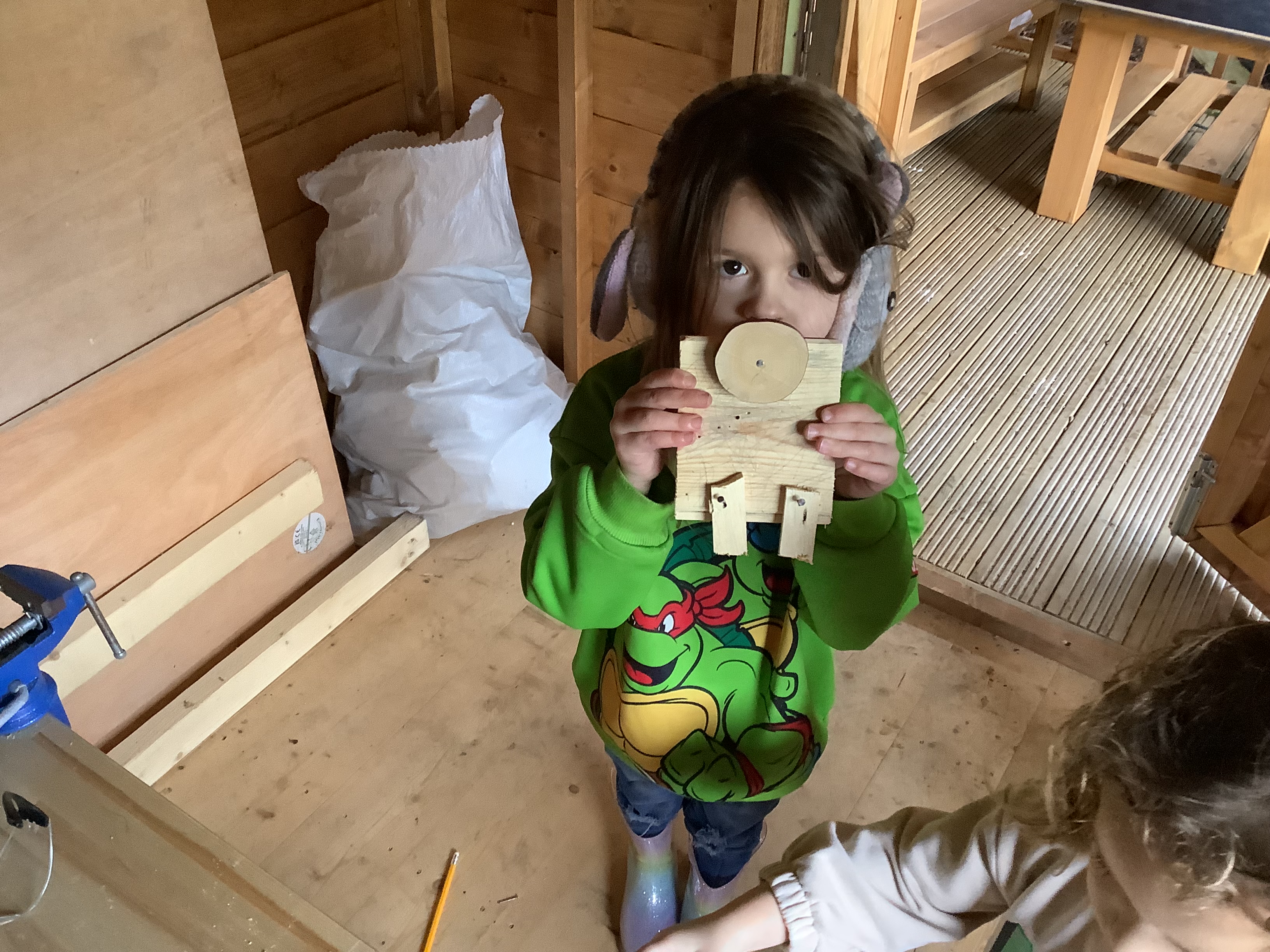
Trained staff are always close by, showing children how to use each tool carefully and safely. Children learn to measure, tap, turn and join pieces of wood, turning their own ideas into real objects. These sessions help build fine motor skills, patience and problem‑solving as they work step by step. We often create small keepsakes that children and their parents can treasure. Each piece is genuinely hand‑crafted by the child, with gentle adult support. Families love taking these creations home as a lasting reminder of their child’s time at nursery.
Why is Woodworking Important for Young Children?
Our Gallery